High-Quality Titanium Alloys – Redefine Dental Implants & Orthodontics
Time:2026-03-24
View:217
I. Wide Applications of Titanium Alloys
With social progress and improved living standards, significant changes have taken place in people’s dietary structures, leading to a growing prevalence of tooth wear and damage. Daily life is often plagued by dental pain, which can even trigger psychological issues such as depression and anxiety. Fortunately, the rapid advancement of modern medicine has provided solutions to these problems. Owing to their outstanding physical and chemical properties, titanium alloys are widely used in dentistry, helping countless patients regain oral health and confidence.
Physicochemical Properties of Titanium Alloys
Titanium alloys possess excellent physical and chemical characteristics, offering stable support and outstanding biocompatibility with human tissues in dental applications. As a silvery-white metal, titanium stands out for its stable chemical nature, resistance to high and low temperatures, and strong corrosion resistance to acids and alkalis. In dentistry, especially for alveolar bone implantation, titanium and its alloys exhibit exceptional biocompatibility, integrating harmoniously with the hard tissues of human bones and providing reliable structural support.
Applications in Orthodontics
We now turn to the applications of titanium alloys in orthodontics, a field focused on correcting malocclusion through mechanical or functional appliances. In this context, titanium alloys are ideal for manufacturing fixed and functional components due to their light weight, high corrosion resistance, and excellent machinability. Beta-type titanium alloys can be fabricated into fine wire elements to meet the precision requirements of orthodontic devices, while cold-worked Grade 4 pure titanium serves as a viable alternative to beta-type alloys, thanks to similar mechanical properties, expanding the possibilities for orthodontic treatment.
II. Unique Advantages of Titanium Alloys
Biocompatibility and Personalized Treatment
The biocompatibility of titanium alloys enables personalized dental treatments while minimizing the risk of bodily rejection in patients. Commonly used titanium alloy grades in the market, including TC4, TC4ELI, GR5, and GR23, play critical roles in dental therapy. Their distinct compositions and properties allow precise matching with diverse treatment scenarios and needs, driving the development of personalized and precision dentistry.
Diverse Compositions and Grades
Different grades of titanium alloys feature unique compositions and performance profiles, adapting to a wide range of dental treatment scenarios and promoting the precision of treatment plans. Thanks to their exceptional physical and chemical properties, titanium alloys are extensively applied in dentistry, helping numerous patients restore their oral health and self-confidence.
III. Segmented Dental Applications of Titanium Alloys
Applications in Prosthodontics
Next, we explore the use of titanium alloys in prosthodontics, which aims to restore dental function and aesthetics through implants and other methods. Titanium alloys demonstrate unique advantages in this field: their stable chemical properties and excellent mechanical performance make them ideal for implant fabrication. With superior machinability and biocompatibility, titanium alloys ensure the long-term stability and functionality of dental prosthetics.
Applications in Implant Dentistry
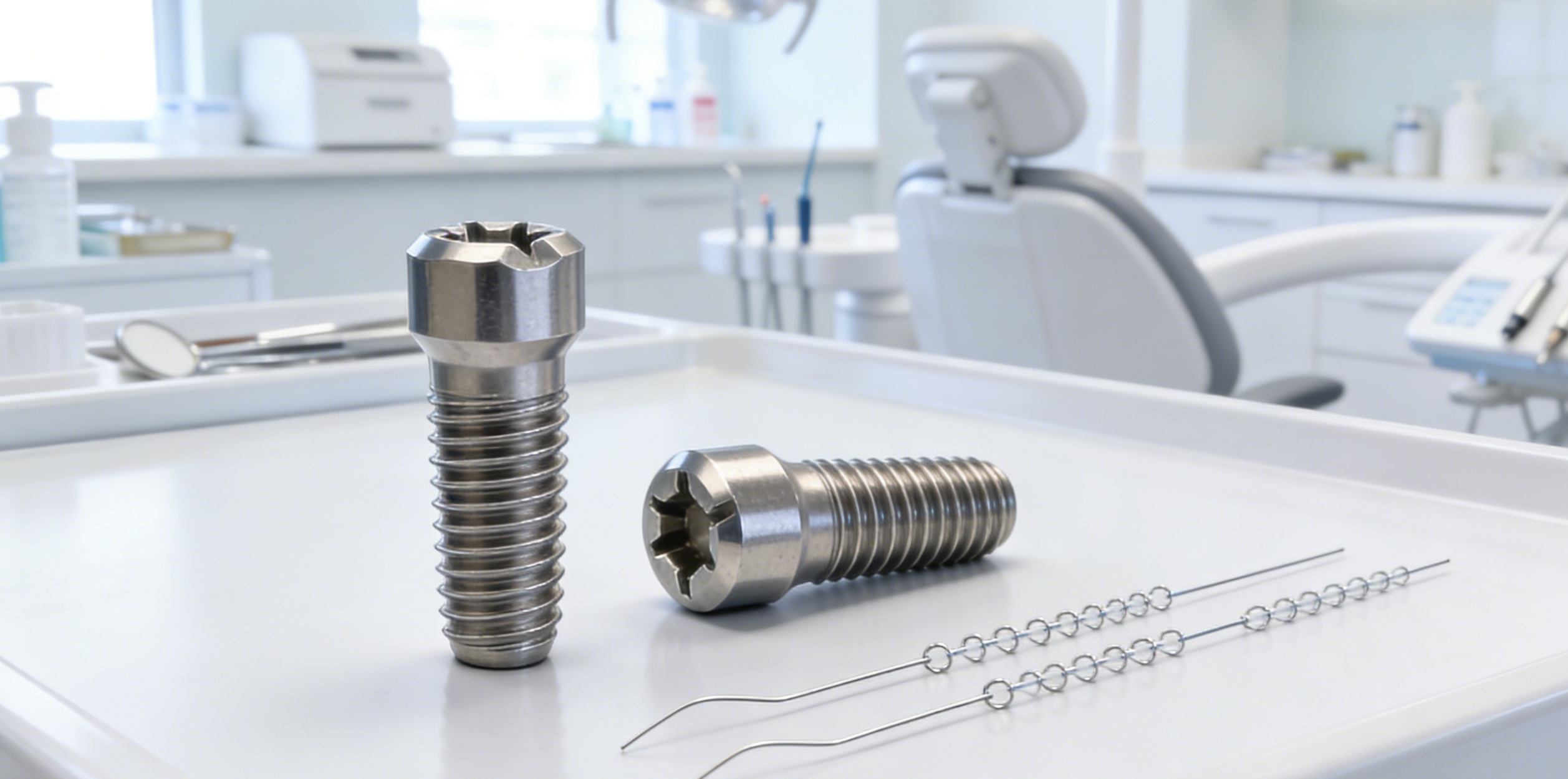
In modern dental surgery, titanium alloys have become the primary material in implant dentistry due to their excellent osseointegration, significantly improving the success rate and stability of dental implants. Titanium and titanium alloy dental implants have a history of over 50 years of clinical application, and their distinctive physical and chemical properties make them ideal implant materials. These materials effectively mitigate electrochemical and corrosive effects, guaranteeing the long-term stability of prosthetics. Research data shows that prosthetics made of titanium alloys maintain excellent form and function over prolonged use, reducing the likelihood of secondary repairs and saving patients both time and financial costs.


