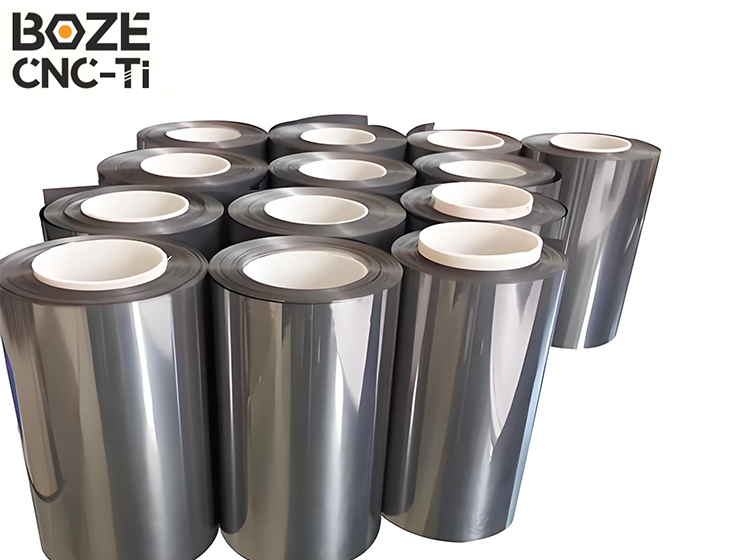
Titanium foil is a versatile material defined by its extreme thinness—typically ranging from 0.01mm to 0.1mm. Because it retains the high-strength, corrosion resistance, and biocompatibility of bulk titanium while being flexible and lightweight, it has carved out a niche in high-tech industries.

Application Area
1. Aerospace and Defense
In an industry where every gram counts, titanium foil is indispensable. It is primarily used for thermal shielding and structural components.
Heat Shields: Used to protect sensitive electronics and airframes from the intense heat generated by jet engines or atmospheric re-entry.
Honeycomb Structures: Foils are corrugated and bonded between sheets to create "honeycomb" panels. These are incredibly stiff but mostly air, used in aircraft wings and flooring.
Engine Shrouds: Its high melting point makes it ideal for lining engine compartments.
2. Electronics and Acoustics
Loudspeaker Diaphragms: High-end tweeters often use titanium foil because it is stiff enough to prevent distortion but light enough to vibrate at extremely high frequencies.
Mobile Devices: Used in internal shielding to prevent electromagnetic interference (EMI) and as a lightweight structural frame for foldable smartphones.
Circuit Boards: Used in specialized flexible printed circuits (FPCs) where extreme durability is required.
3. Medical and Bio-Engineering
Titanium is "biocompatible," meaning the human body doesn't reject it.In foil form, it can be shaped to fit the delicate contours of the human anatomy
Pacemaker Casing: The hermetic seal provided by thin titanium foil protects the internal electronics from bodily fluids.
Cranial and Dental Reconstruction: Surgeons use mesh-like foils to help regrow bone or to act as a barrier during dental implants
Surgical Shims: Used in precision medical instruments where high sterilization (autoclaving) would ruin other materials.
4. Energy and Green Tech
Titanium foil is a critical component in the transition to renewable energy, particularly in hydrogen technology.
Hydrogen Fuel Cells: Used as a substrate for Bipolar Plates.Titanium foil resists the highly acidic environment inside a fuel cell, ensuring a long lifespan for the unit.
Lithium Batteries: Used as a current collector or anode substrate in specialized high-performance batteries where weight and chemical stability are paramount.
Solar Panels: Acts as a backing material for certain types of thin-film solar cells.
5. Industrial and Chemical Processing
Because titanium develops a natural oxide layer that resists acid, thin foils are used as protective linings.
Heat Exchangers: Foil-thin plates allow for rapid heat transfer between liquids while preventing the corrosive chemicals from eating through the machine.
Rupture Discs: In chemical pressurized tanks, a precisely calibrated piece of titanium foil acts as a "safety fuse." It is designed to burst at a specific pressure to prevent a catastrophic tank explosion.
Mechanical properties of titianium and titanium alloys
| ASTM B265 | Element Content(wt%) | Mechanical Properties |
| N,max | C,max | H,max | Fe, max | O, max | Others | Tensile Strength Mpa,min | Elongation% min |
| GR1 | 0.03 | 0.08 | 0.015 | 0.20 | 0.18 | - | 240 | 24 |
| GR2 | 0.03 | 0.08 | 0.015 | 0.30 | 0.25 |
| 345 | 20 |
| GR3 | 0.05 | 0.08 | 0.015 | 0.30 | 0.35 |
| 450 | 18 |
| GR4 | 0.05 | 0.08 | 0.015 | 0.5 | 0.4 |
| 550 | 15 |
| GR5 | 0.05 | 0.08 | 0.015 | 0.4 | 0.2 | Al:5.5-6.75V:3.5-4.5 | 895 | 10 |
| GR7 | 0.03 | 0.08 | 0.015 | 0.30 | 0.25 | Pd:0.12-0.25 | 345 | 20 |
| GR9 | 0.03 | 0.08 | 0.015 | 0.25 | 0.15 | Al:2.5-3.5V:2.0-3.0 | 620 | 15 |
| GR11 | 0.03 | 0.08 | 0.015 | 0.2 | 0.18 | Pd:0.12-0.25 | 240 | 24 |
| GR23 | 0.03 | 0.08 | 0.0125 | 0.25 | 0.13 | Al:5.5-6.5 V:3.5-4.5 | 828 | 10 |
How About Thin Titanium Foil Roll Production Process?
1. Hot Rolling
Hot rolling titanium ingot by hot rolling machine into half-finished products (rectangle shape), which is sent to cold rolling mill for further processing.
2. Cold Rolling
Cold rolling is a kind of cold-rolled process which makes the surface finish and dimensional accuracy better than that of hot rolled strip through pressing and plastic deformation in room temperature state. It’s also called cold-rolled strip or cold plate.
3. Annealing
Annealing is a kind of process used to eliminate metal internal stress and improve plasticity, softness and extend metal service life. It can also be used as a preparation for further processing or heat treatment.
4. Cutting
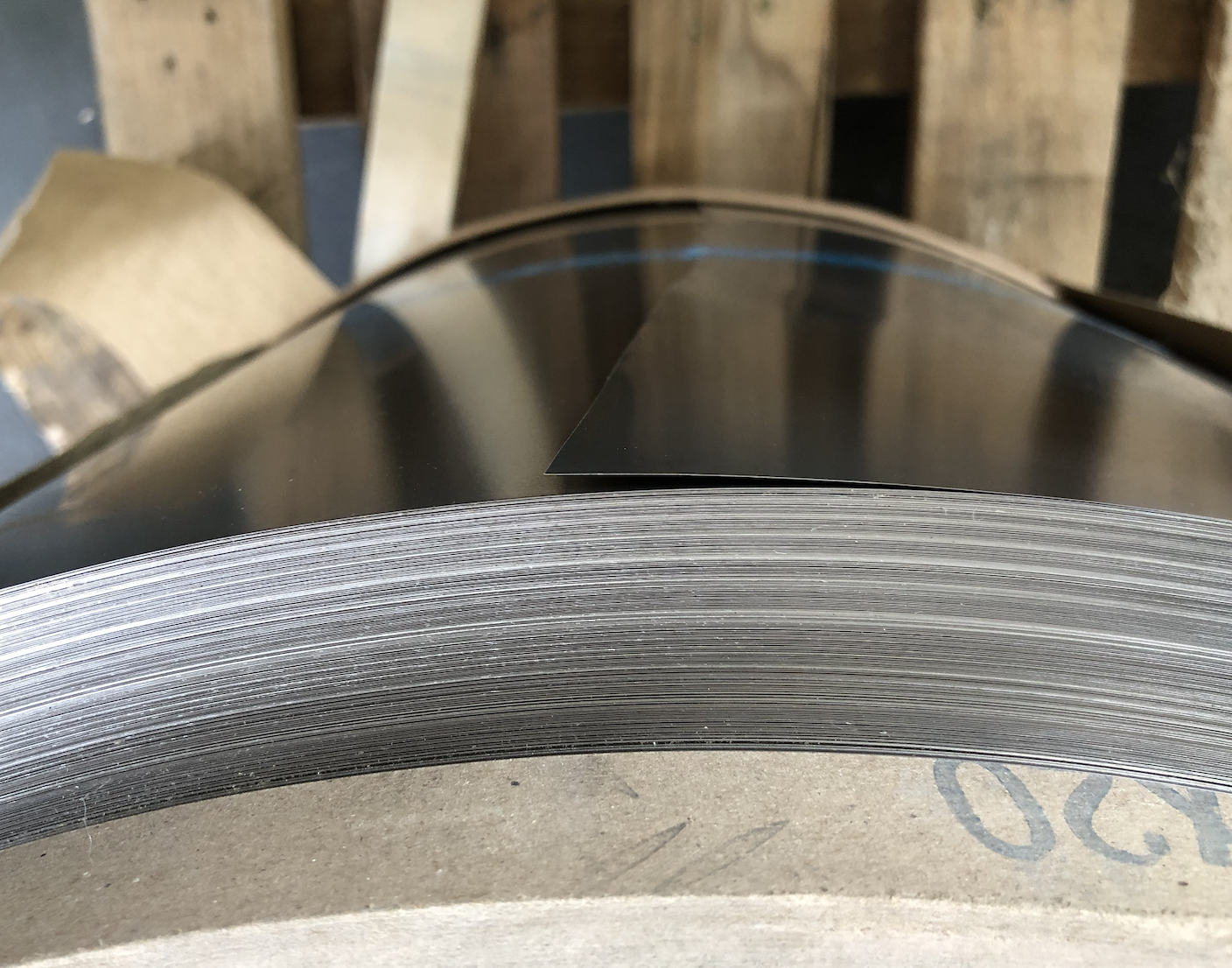
Cut the annealed strip foil into desired widths by slitting machine which gives finished product: Titanium Foil.
5. Inspection & Packaging
The final stage is inspection. The produced titanium foil must be inspected before shipment.

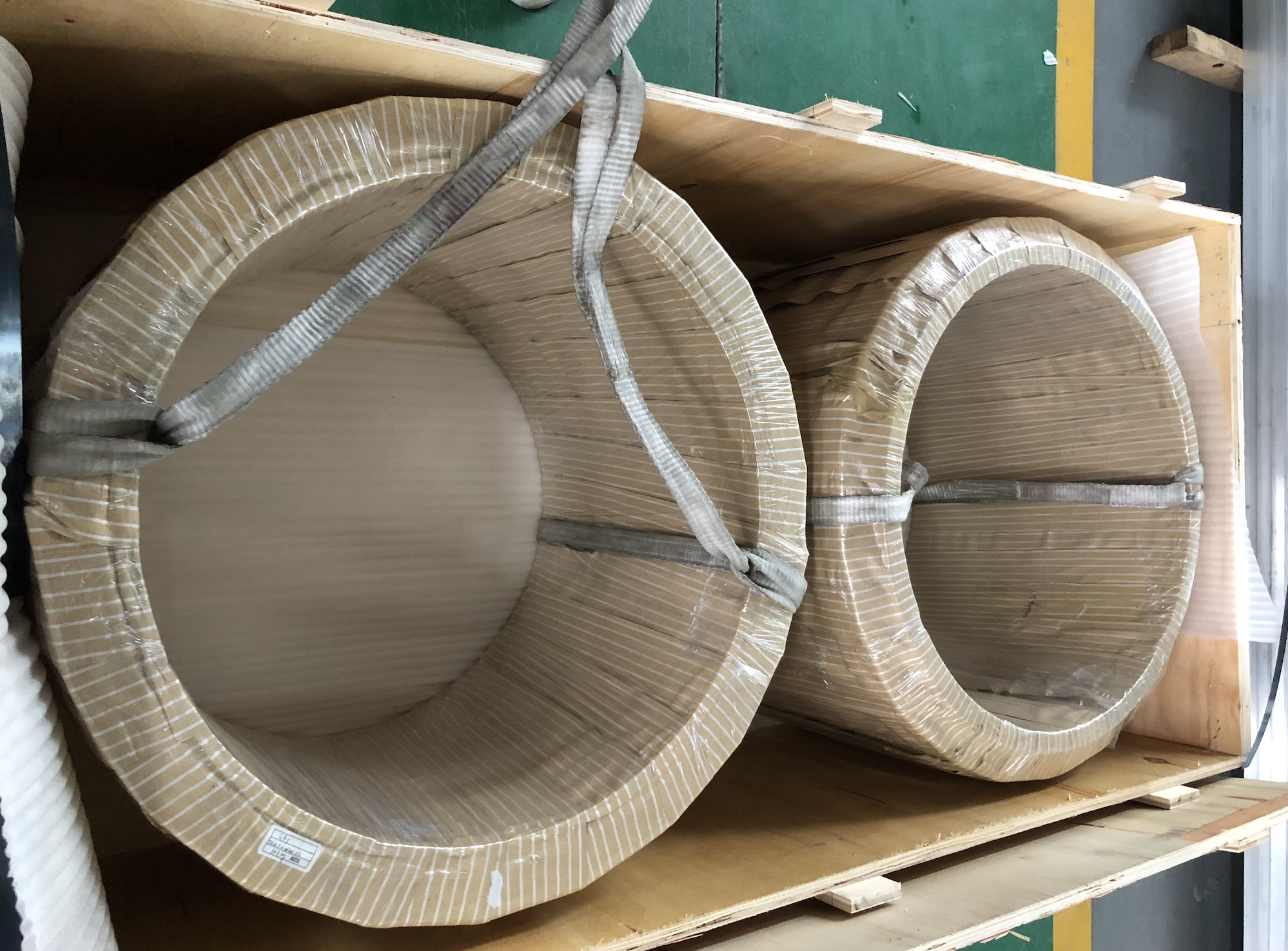
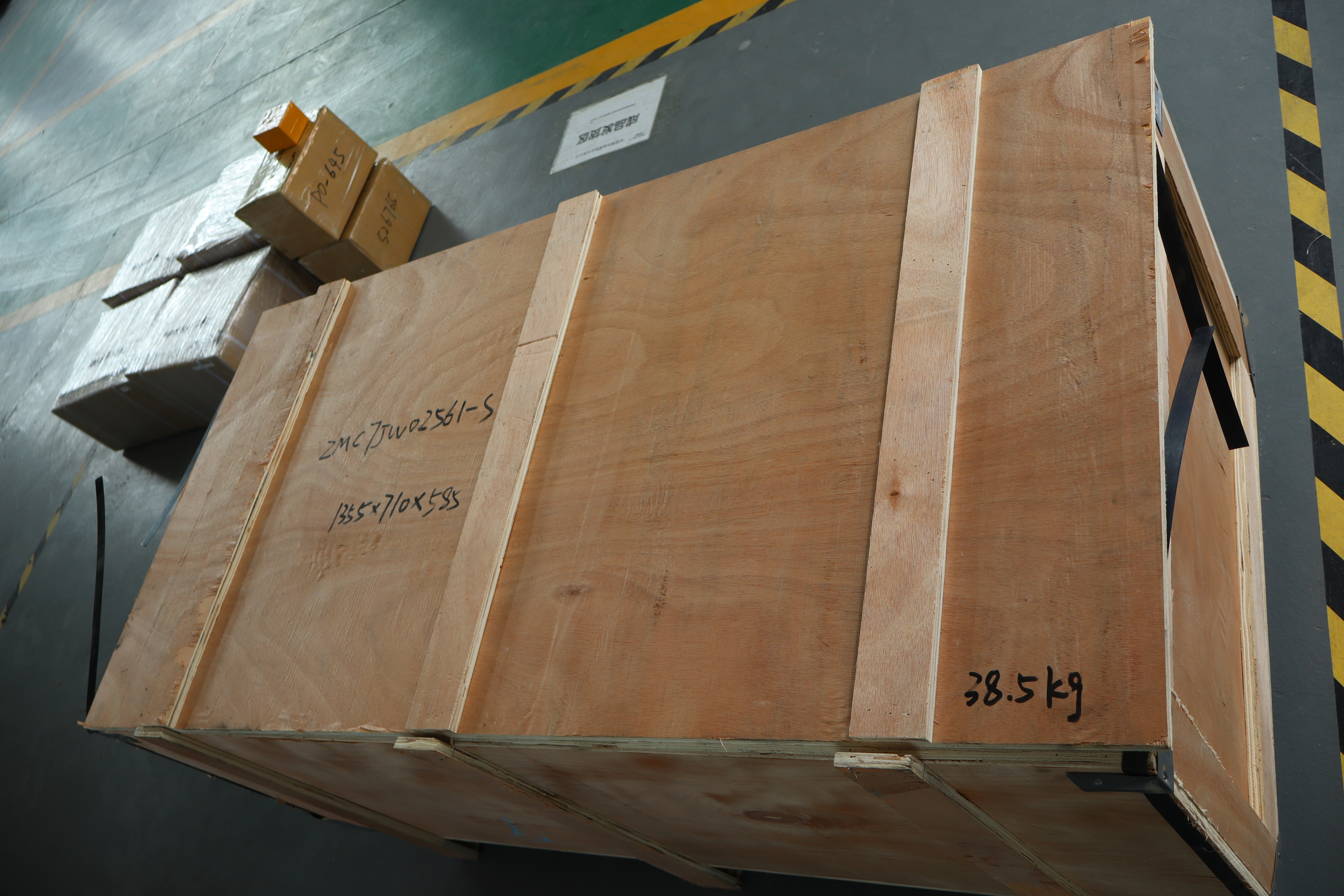
Packing
Wooden Box Package
To get a quick quote for titanium foils you need to know:
Quantity (Kgs/Tons)
Size (Thickness x Width x Length)
Material Grade (GR1, GR2, etc)
Edge (Slit/Deburred/Round)
Coil ID (200mm/300mm/400mm/500mm)
Surface Finish (Mill origin, polishing)
Packaging (Wooden case/Wooden pallet)